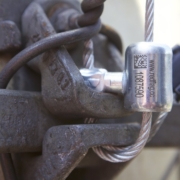
map of idle zones from STM

Train cargo security relies on a secure yard, a fast-moving train, and tamper-proof and tamper-evident seals with long defeat times. However, when trains slow down or halt in what we call idle zones, cargo is highly vulnerable. These zones, often lacking surveillance and with high accessibility for criminals, include rural train stations and the outskirts of ports and yards. It’s in these moments that the risk to your cargo is at its highest.

BRX Smart Barrier Locks are highly secure electronic seals that revolutionize cargo security. BRX employs state-of-the-art sensors and geofencing technology to notify you instantly of deviations from designated routes, cable cuts, or tampering attempts. Our STM (Security Transit Management) application can aggregate speed, route, and location data to create a comprehensive map of idle zones, allowing you to identify vulnerable areas in your supply chain, increase accountability among all parties, and effectively prevent security breaches.

rendering of human trafficking detection by Redflag's BRX Smart Barrier Lock

In the cargo security and logistics industry, we tend to talk about security from the standpoint of preventing theft and vandalism and increasing a company’s bottom line. Too often, companies decide to absorb the potential losses from theft rather than invest in complete cargo security solutions, failing to consider the big-picture ramifications of tampering. It’s not just the product taken from containers that matter; the true cost of tampering is a human rights issue. Tampering is a means of drug and contraband smuggling, food and chemical contamination, and human trafficking.

We see intermodal shipping volumes dramatically increasing from Mexico to the US and Canada. At the same time, the migrant crisis is at an all-time high, and migrants from across the world are flocking to Mexico as a gateway north. Throughout North America, ports are overwhelmed with tighter time constraints and fewer resources, and opportunities for human trafficking are abundant.

The BRX Smart Barrier Lock provides complete visibility into your cargo and supply chain. We also designed it specifically to detect and alert instances of human trafficking.

Here’s how the BRX Smart Lock helps prevent human trafficking:

Human Voice Detection: Our AI can identify and isolate human voices amidst background noises, alerting authorities to potential trafficking situations.

Movement and Proximity Recognition: By differentiating between freight movement and human activity, our technology helps track and respond to suspicious behavior inside shipping containers or railcars.

Human Breath Monitoring: Utilizing advanced CO2 sensors, we can detect even subtle increases in CO2 levels, indicating the presence of individuals within sealed containers.

Choosing whether or not to invest in a complete cargo security solution like BRX is more than just an optional business expense subject to cost-benefit analysis. The reality is that weak cargo security has significant human implications.

Whether it’s the threat of human trafficking or the risk of tampering with food supplies, the consequences are very real. At Redflag, we believe that cargo security is not just about protecting profits but also about safeguarding lives. Global trade is booming, and companies have a shared moral responsibility that transcends borders and industries.

BRX vs LXE Electronic Seals Comparison Rendering

Redflag’s LXE and BRX electronic seals differ in use case and lifespan.

  • The LXE Disposable GPS Seal is a one-time use, high-security, tamper-resistant cable seal built on Cellular IoT with cut and tamper detection. It takes the most critical elements of
  • The BRX Smart Barrier Lock is designed for physical security and continuous monitoring for the lifetime of the intermodal container.

The LXE Disposable GPS Seal and BRX Smart Barrier Lock Electronic Seal both offer: 

The BRX Smart Barrier Lock goes a step further to:

  • last the lifetime of an intermodal container without maintenance (15 years)
  • lock and unlock via geofencing, machine learning, or mobile app
  • provide critical container vital signs not limited to lock status, temperature, acceleration, motion, and CO2 detection
  • alert on incidents of human trafficking, vulnerabilities, anomalies, and theft
Rendering of BRX Smart Barrier Lock Electronic Seal

Evolution of the BRX Smart Barrier Lock: The Ultimate Real-World Cargo Security Solution

Our electronic seals offer a complete cargo security solution built for real-world applications. Here’s how our BRX Smart Barrier Lock evolved.

A secure design.
Time is critical in seal tampering as organized criminals rarely take more than a few minutes to tamper with and re-seal shipping containers. Petty thieves may resort to vandalism or stealing valuable raw materials.

Our BRX Smart Barrier Lock is built upon a secure base: a barrier seal that can withstand a 30-minute attack. We had a successful test with Union Pacific Railroad, and while our product functioned as intended, we encountered vandalism and knew we could push our design further. Criminals attempted to break the aluminum keypads, which generated the opening combination in our original design. Polycarbonate keypads somewhat improved the issue but did not eliminate vandalism entirely. We took a technological leap and redesigned the housing of BRX to look like little more than a box from the outside. We would control the seal remotely.

Innovative electronics.
After multiple iterations using Bluetooth, we realized that GPS was a critical component. BRX units can be controlled using GPS fencing or opened by app. Clients know where their unit is and when it is opened and can set different permission levels across personnel. Companies can fully automate their units by integrating with their bill of lading so that all units can be opened at customs and automatically close until they reach their next secure location.

Zero Maintenance.
Electronic seals on the market currently use one of three battery options: disposable batteries with a 3-5 year lifespan, rechargeable batteries, or solar. With an average container life-cycle of 15 years, these options are not ideal. Changing or recharging batteries creates a supply chain within the supply chain, incurs added personnel and shipping costs, and takes containers out of commission. Solar power comes with its own problems, like loss of efficiency, vandalism, and theft.

Our BRX units use a state-of-the-art, self-contained battery with a 15-year lifespan. They are zero maintenance and secure.

Damage Free Installation
Most electronic seals are drilled into the container’s door. In our early tests, we did just that, but the process was time-consuming and uncomfortable in harsh climates. Furthermore, no company wants to damage their container or allocate more than a few minutes to installation.

Now, BRX can be installed in minutes without prior training and without damaging any part of the container.

Smart Insights.
BRX is secure, tamper-resistant, tamper-evident, and zero maintenance for the container’s lifetime. BRX eliminates human error and generates thousands of data points on speed, location, personnel, delays, idle zones, and attempted tampering. AI predictive analytics can help companies optimize routes, avoid delays, manage fleets, and maintain accountability throughout their supply chain.

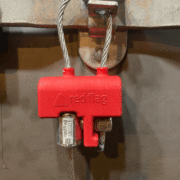
redflag electronic seal called LXR

Four Reasons Electronic Seals Fail in Real-World Applications

Many in the industry understand that physical seals alone are insufficient, and human error is the biggest reason for continued cargo security failures. However, there’s a reason why no electronic seal on the market has been widely adopted. The truth is that most solutions we’ve seen use outdated technology and cumbersome solutions that create as many problems as they solve in real-world applications. Let’s break down the four most common reasons electronic seals fail in real-world applications:

1. Reusable products create a whole new supply chain.

Electronics are expensive, especially over the last few years, with global supply chain delays and price-gauging. Most manufacturers make reusable products instead, which is great in theory. In reality, this generates a whole supply chain within the supply chain for packaging, shipping, checking, and holding seals from application to application. No company wants to invest time or funding in implementing a whole new process.

2. Disposable batteries have limits.

The life of a container is roughly 15 years. The shelf life of a disposable battery is anywhere from 3-6 years. Picture a company with 40k containers. They install their electronic seals, usually using damaging techniques like drilling, and a few years later, they are faced with disassembling 40k active units dispersed throughout their global supply chain and replacing the batteries. This enormous task requires extensive staffing, training, planning, shipping, and taking containers out of commission for extended periods. It’s unrealistic for a company to take this on.

3. Solar has drawbacks.

Realizing that changing batteries is not an option, many seal manufacturers release electronic seal designs using solar. Solar technology is great but has yet to be fully developed. Rechargeable solar batteries lose capacity, and panels lose efficiency over time. To account for reductions in efficiency, manufacturers will design their electronic seals with higher-end solar panels and batteries. Not only are visible solar panels vulnerable to vandalism, but the more expensive the panel, the more potential for theft.

4. Installation can damage equipment.

A shipping container’s life span is upwards of 15 years. Companies testing electronic seals can’t be expected to damage their cargo by drilling multiple holes into the container or removing whole chunks of steel. Installation must be streamlined and quick to avoid taking containers out of commission, rerouting containers, or causing shipping delays.

We spend weeks on the ground each year traveling along client container routes, working with personnel, and analyzing supply chain data. We know that the only way for electronic seals to be accepted by the market is to account for real-world scenarios.

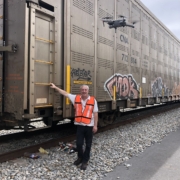
Image of Gregory Kleynerman, Founder and CEO of Redflag Cargo Security Systems LLC in front of an intermodal rail car

20+ years ago, I started representing seal manufacturers in Eastern Europe. You can imagine that with so much political chaos after the fall of the USSR, they were dealing with constant issues with theft, smuggling, and contraband. I got involved in a special initiative to prevent smuggling, theft, and contraband by implementing border checks, weigh stations, and other security initiatives at the point of entry and exit of countries in the region.

To give you a characteristically Eastern European example of what we were dealing with, imagine a single 40-foot container of cigarettes. The duty fees on that container alone would have been half a million dollars. Obviously, there was a lot of pressure on the side of customs to ensure that shipment remained secure and duty fees were paid, and a lot of incentive on the other side to do the opposite. Now, we’re following the path of this container. It gets checked upon entry to the country, weighed, and sealed. A day or two later, it’s leaving the country, the weight matches up, and customs opens the same seal to check the cargo. Inside are bags of potatoes weighing the same amount as the cigarettes should have, and the seal shows no evidence of tampering.

There’s only one way this could have happened, so I gathered a team to start testing seals from the manufacturers I represented and some of the most reputable and seemingly secure seals on the market. Every seal we tested could be tampered with and re-sealed without evidence using simple and highly available tools in seconds.

I alerted the seal manufacturers I represented, assuming they would immediately start re-engineering their products. They were unwilling to update their products, claiming they’ve been doing business the same way for 120 years. I answered that “seal technology is not wine or cheese. It doesn’t get better with age,” and gathered a team of 8 esteemed engineers to redesign the cargo security seal as we know it.

Redflag was born because the seals on the market did not provide a reliable way to prevent or detect tampering. It’s 2024, and we have innovated, iterated, and integrated our technology at each step. Twenty years later, we still produce tamper-resistant and tamper-evident seals as part of a complete cargo security solution. Except now, with theft, smuggling, trafficking, and contraband more prolific in the Americas than in post-soviet Eastern Europe, the world has no choice but to tune in. – Gregory Kleynerman, Founder & CEO

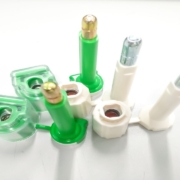
image of generic bolt seals

Five Drawbacks to Using Bolt Seals and Why Cable Seals Are Better

Bolt seals gained popularity as a cheap and strong container seal option, and while their vulnerabilities were exposed 20+ years ago, they continue to be prevalent in the industry.

Here are the reasons we believe cable seals are superior from a security perspective.

  1. Interchangeable Parts: bolt seals have no standard for design, but because most of them are hat and pin, 90% are interchangeable. Tamperers can come prepared with duplicate parts.
  2. Duplicate Numbering: Most bolt seals are produced in Chinese factories that will print any seal number given to them by a company or individual. That means that there can be duplicate seal numbers from different companies, and tamperers embedded within the company can request and prepare duplicate bolts in advance just based on the subsequent numbers in a box. The bill of lading doesn’t specify if the bolt number should be on the hat and pin, just the hat, or what color the bolt should be for an upcoming shipment. We have witnessed several instances where containers with bolt seals were breached, and an extra seal was waiting inside the door to replace the tampered one.
  3. Easily Tampered: Bolts can be spun to release the pin from the hat. They can be cut and re-threaded, and they can be cut and re-glued using highly accessible and robust materials. The strength of the steel doesn’t serve as a true protection.
  4. No Tamper Evidence: There is no way to check for tampering. Square bolts or un-spinnable bolts can be cut and re-glued, and security personnel cannot discern if a bolt is un-spinnable or tampered and glued back together.
  5. Don’t Secure Two-Bar Containers: When a bolt is applied to the right door latch on a two-bar container (essentially a container with parallel bars – one or two on each door), the bolt must be applied to the latch on one side. The rivet securing the latch to the bar can be removed, the door opened, and the rivet secured back into place undetected. You’ll often even see a rivet replaced with a nut to make it easier to remove. However, a secure cable seal with a 1500mm cable can provide a more reliable solution for securing the bars of both left and right container doors without the risk of tampering.

Why choose cable seals?

No standard exists for producing, numbering, or verifying bolt seals, so parts get replaced frequently without leaving any signs of tampering.

Unspinnable bolts were introduced to the market as a more secure option. However, they can be difficult to distinguish from bolts cut, threaded, or glued back together, confusing security personnel working with multiple bolt seal styles. As a result, instead of checking for tampering, personnel often cut the bolt at the destination and move on.

We design our seals to resist all five common forms of tampering. Redflag seals cannot be easily or quickly duplicated in China and work on all types of containers. Our product range provides varying levels of oversight and security, allowing you to select the appropriate level of protection for your shipment and identify any vulnerabilities in your supply chain.

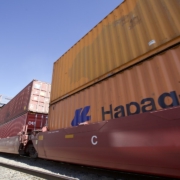
intermodal railcars moving on train

Five Methods of Seal Tampering and Why Seal Strength Won’t Protect Your Cargo.

In today’s global economy, supply chain security is essential. Unfortunately, tampering seals is the most prevalent way in which cargo is stollen or contraband is smuggled. In our previous post, we outlined why relying on ISO 17712-2015 certified seals is not enough to protect your cargo. Now, we’ll dive deeper into the five most common methods of seal tampering and give real-world examples of why cable strength won’t protect your containers.

We cannot stress enough that tampering is not just about opening a seal. It is about opening and closing the seal without detection. This leaves your cargo vulnerable at any point in the supply chain and leaves you blind to where and when theft, smuggling, and contraband occur.

Immutability in the physical flow of the supply chain is as essential as in the financial or information flows. If it does not exist in the material flow, supply chain integrity cannot be asserted. This also suboptimizes the role of other risk mitigation mechanisms such as NII or container inspections for example. Without tamper evidence, there is no anomaly detection and no way to understand where a problem in the supply chain occurred. No anomaly detection, no actionable intelligence. – Dan Garcia, Senior Analyst at SIMS World Wide

5 Methods of Seal Tampering

We will go over the five most common methods of seal tampering below. What may surprise you is that NONE of the following techniques require expensive tools, skills, or much time to implement. These techniques are simple and highly effective on the majority of seals, even ISO-certified seals.

  1. Ratcheting: The cable is twisted until it loosens and disengages from the internal locking mechanism.
  2. Picking: A thin steel cable is used to release the spring of the internal locking mechanism.Because most ISO-certified seals are tested for strength, seal manufacturers don’t typically put effort into concealing the locking mechanism or making it inaccessible.
  3. Sleeving: This technique is used when tamperers are unfamiliar with the location of the locking mechanism within the seal body. They wrap the cable in a layer of aluminum, usually from an old can, to block friction with the cable, release it from the mechanism, and then unwrap and re-insert.
  4. Freezing: Most railways have a fire board complete with a fire extinguisher. Most extinguishers are filled with pressurized CO2 rather than chemicals outside the US. Tamperers pour a small amount of water into the seal body and blast it with CO2 from the extinguisher, lowering the internal temperature to -76°C to the point where the water inside freezes the spring. The cable can then be removed without friction or pressure to trigger the locking mechanism.
  5. Changing the Cable:This technique uses force to ram through the opening of the cable. For ISO-certified seals, there is a minimum load strength specification of 10 kilonewtons, which means a steel cable between 3.2 and 3.5mm. The issue is that the aluminum seal body is softer than the steel cable which allows the tamperer to use the strength of the cable to release the cable from the seal body.

How are Redflag seals different?

With over 20 years of on-the-ground experience and insight, we anticipate weak points in the supply chain and design our seals to surpass ISO standards and remain secure. Our seals utilize innovative design and undergo independent testing at Dayton T. Brown, Inc. Laboratories to resist all 5 of these common forms of seal tampering.